
Swiss-made fuel catalyst
The same fuel.
More useful energy.
For fleets, vessels and energy-intensive operations.
SWISS MADE · Fuel catalyst platform
Click to compare.Tap to compare.
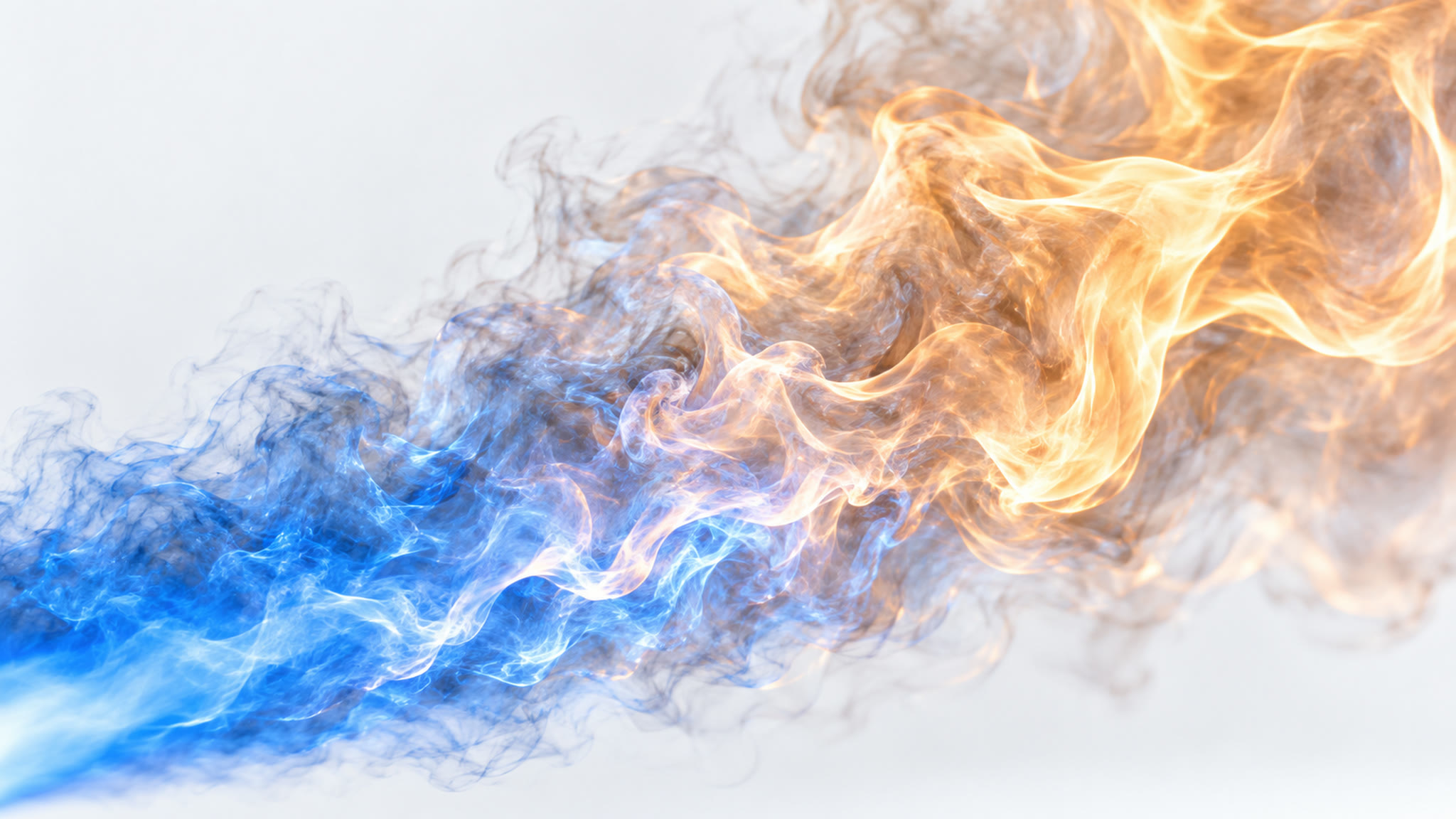
With NTROPYX: the same fuel, burned more completely.
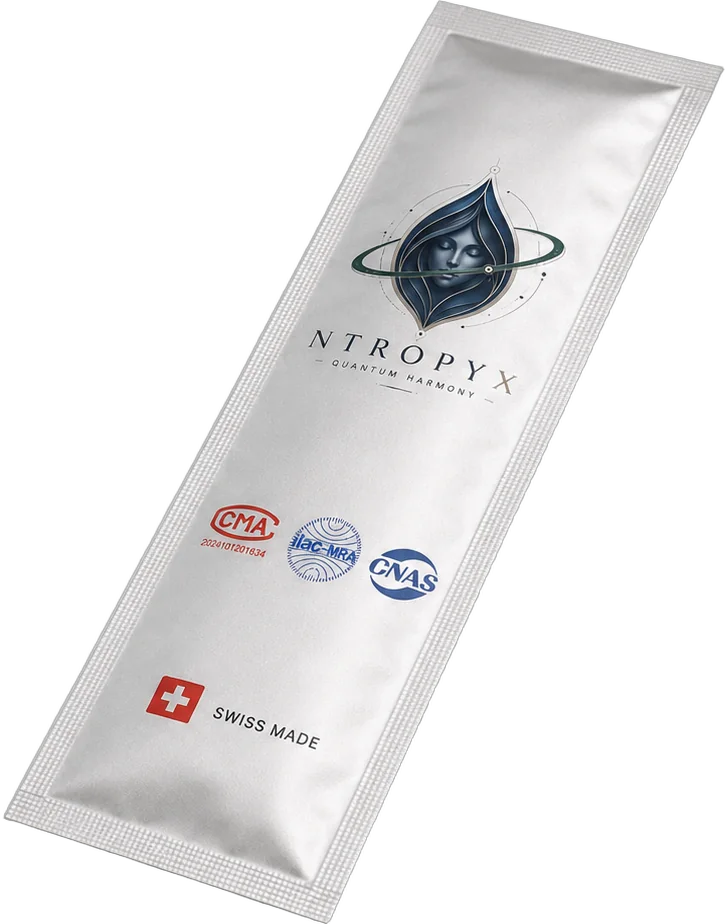
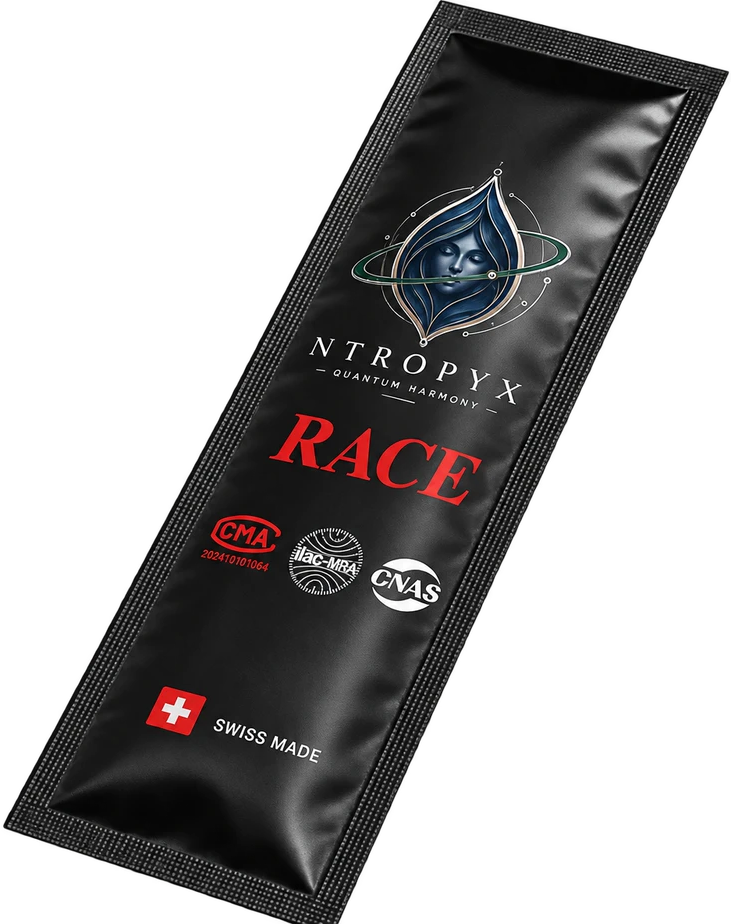
Evidence before adoption.
Catalyst. Not a conventional additive.
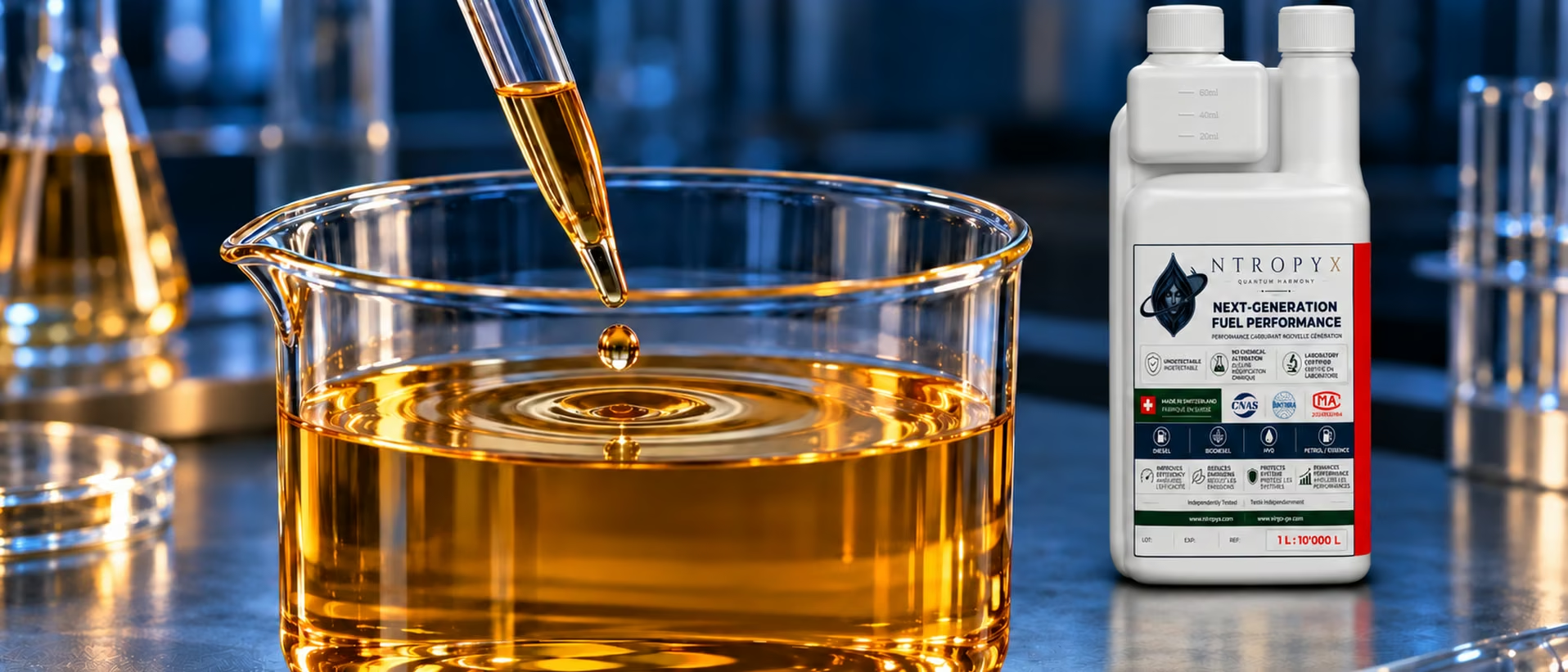
Fuel unchanged. No detectable chemical transformation.
Official testing. Octane, cetane, consumption, emissions.
8–12%. Documented savings range, engine bench + field.
−38%. Reduced CO signal, depending on engine and fuel.
100% of fuel families. Diesel · HFO · HVO · petrol.
Swiss origin. Since 2014.
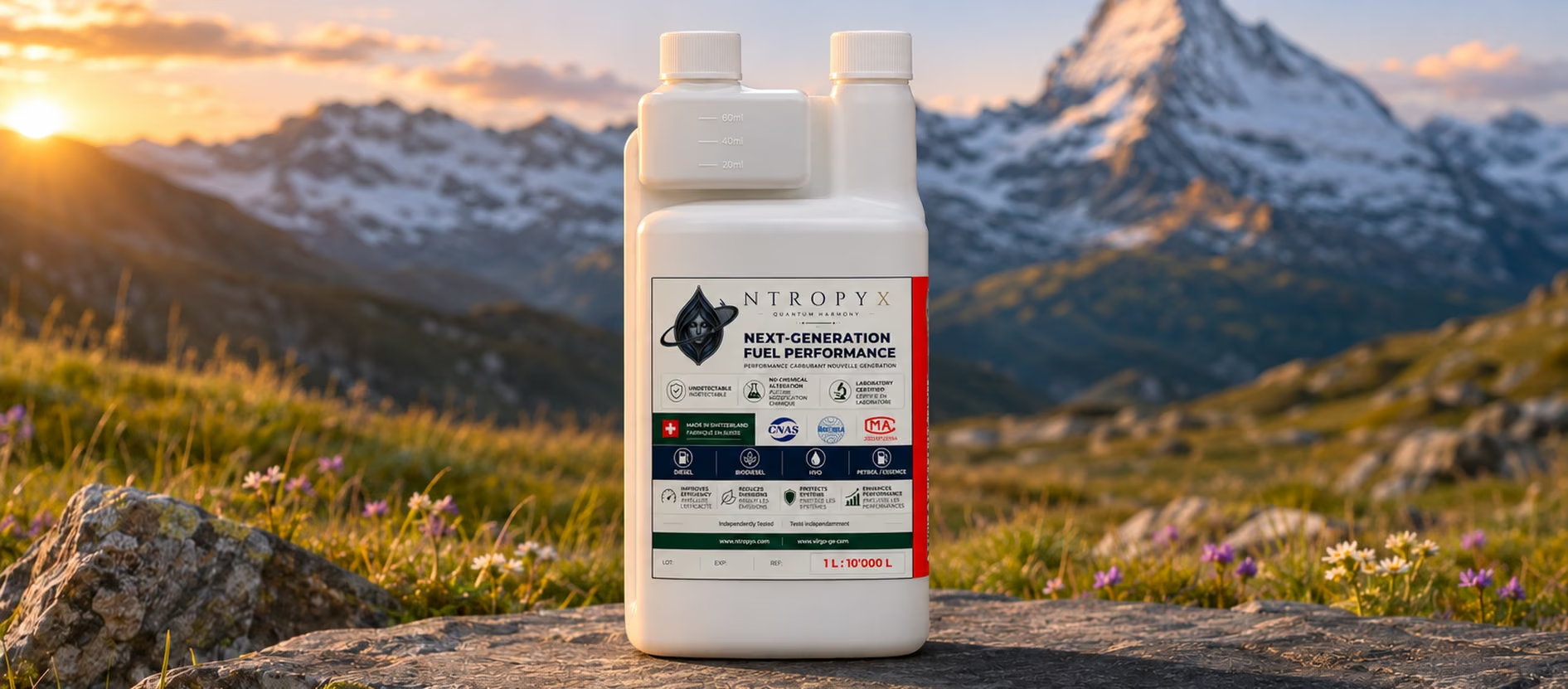


The proof must be immediately visible
NTROPYX is a combustion catalyst.
It has one function: to bring each combustion cycle as close as possible to its theoretical efficiency — near-perfect combustion, in which the fuel’s energy is fully released rather than dissipated as losses, residue and smoke.
NTROPYX brings combustion closer to its useful efficiency, without adding a conventional additive and without modifying the engine. In documented cases, this translates into 8 to 12% less fuel, cleaner combustion, less fouling and lighter maintenance.

It acts on the reaction, never on the substance: laboratory chemical analyses detect no transformation of the treated fuel.
Everything rests on catalytic action of extreme precision, active at less than 0.02 ppm.
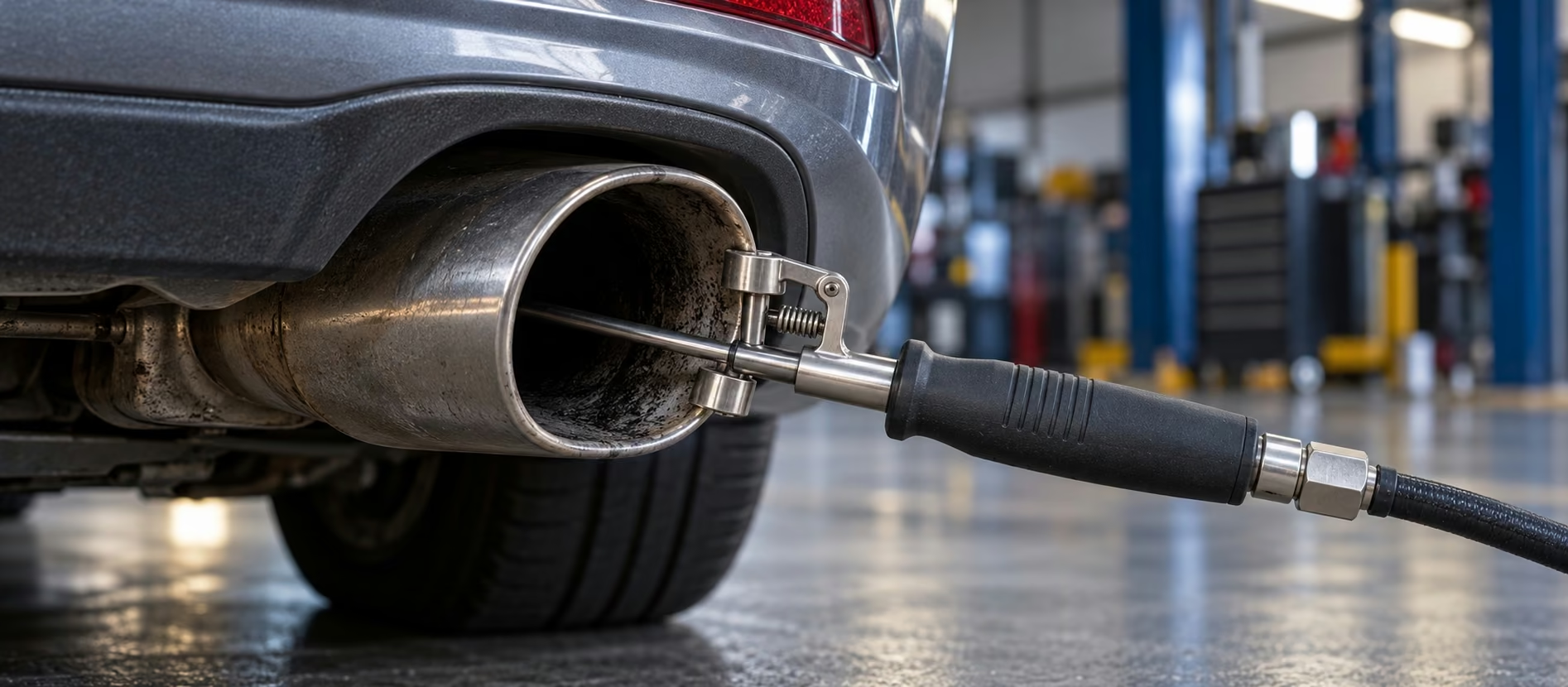
Official tests, conducted to European and Chinese standards, measure higher octane and cetane numbers, lower consumption, and a reduction in both fine particles and pollutant emissions.
A technology proven over fifteen years, commercialised for more than seven years, it is used across all fuels — road, marine, industry, generator sets — without any engine modification or change of equipment.
The result for the operator is direct: lower fuel costs, cleaner combustion, less engine fouling, lighter maintenance, longer service life.

Combustion, taken to its limit.Not a better fuel. The same fuel, burned as completely as chemistry allows.
The fuel stays the same. The combustion doesn’t.Active below 0.02 ppm — beneath what laboratory analysis can detect, inside the reaction where energy is released.
8 to 12% less fuel. Up to 70% fewer emissions.No engine modification. No equipment change. No downtime.
Fifteen years in service. Three billion road kilometres.Engineered in Switzerland. Verified under CNAS, ILAC-MRA and CMA.
One principle, fuels to be qualified.

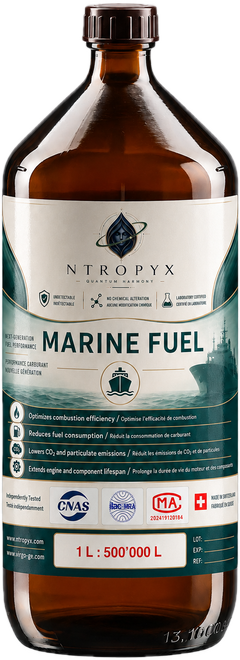
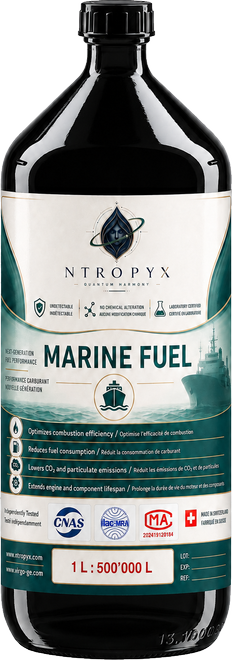

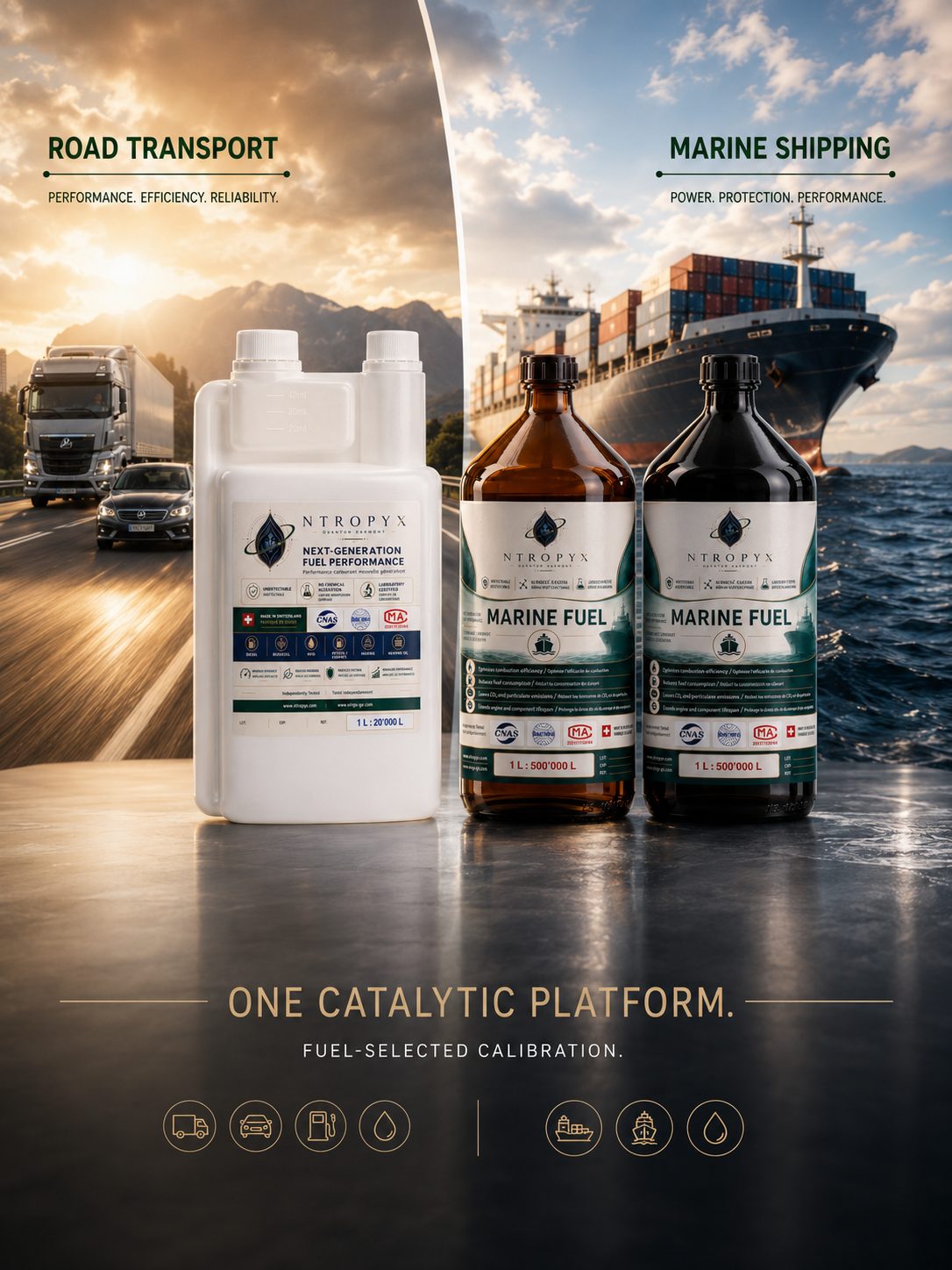
-
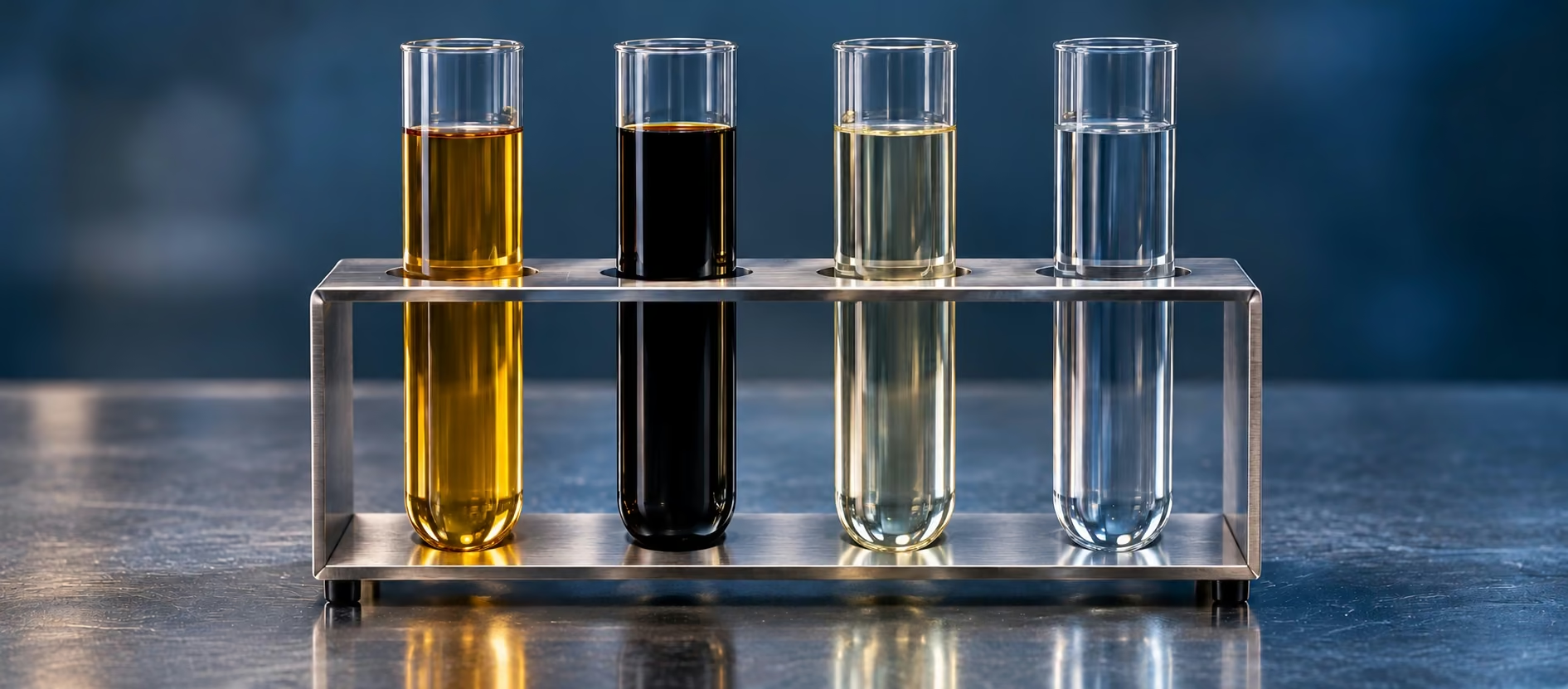
White bottle. For road and standard fuels.
-
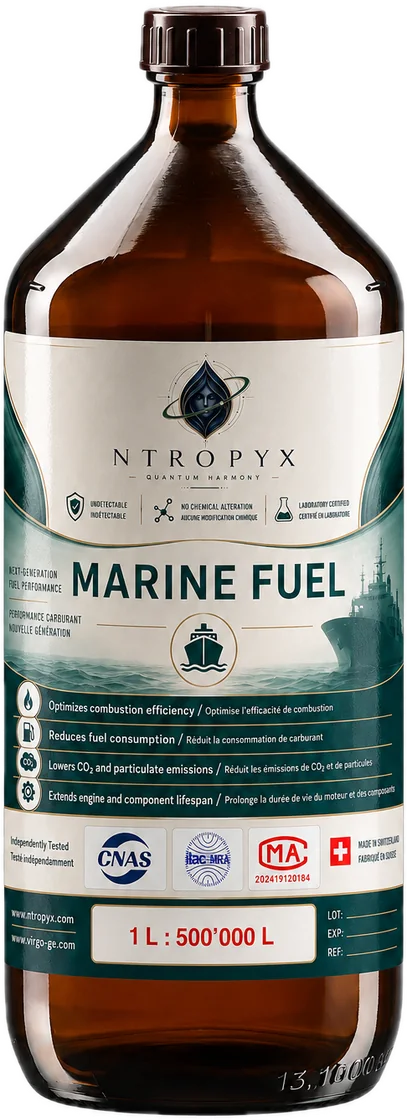
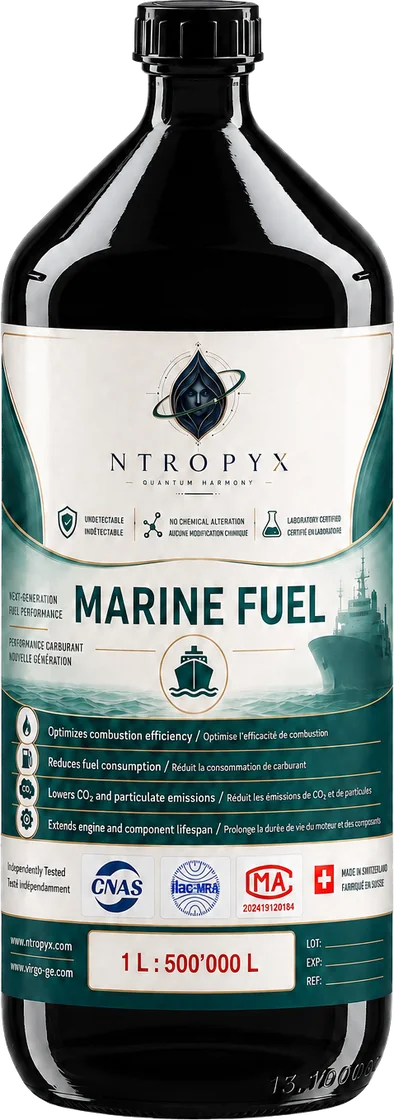
Brown and black bottles. For marine use.
-
Dosing. The logic stays the same; dosing is worked out per fuel and per operation.
-
Start with the fuel. End with the measurement. The right order is deliberately simple: fuel, bottle, dosing, proof, economic scenario.
The science, one page
Combustion explains the gain.
The point is not to rename the fuel. The point is to promote more complete oxidation, so that less energy leaves the engine as waste.

Technical visualisation · fuel better exposed to oxygen
Technical evidence
Measurement decides before ROI.
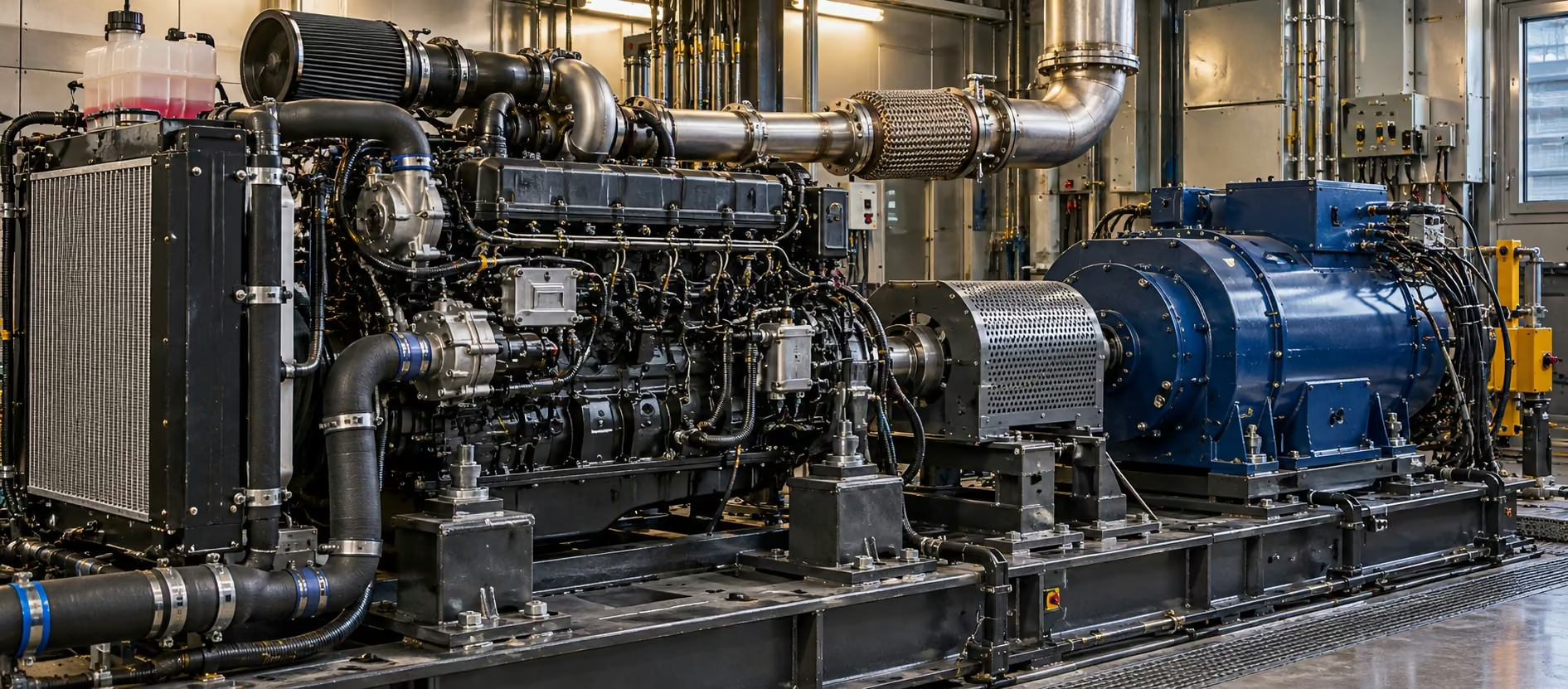
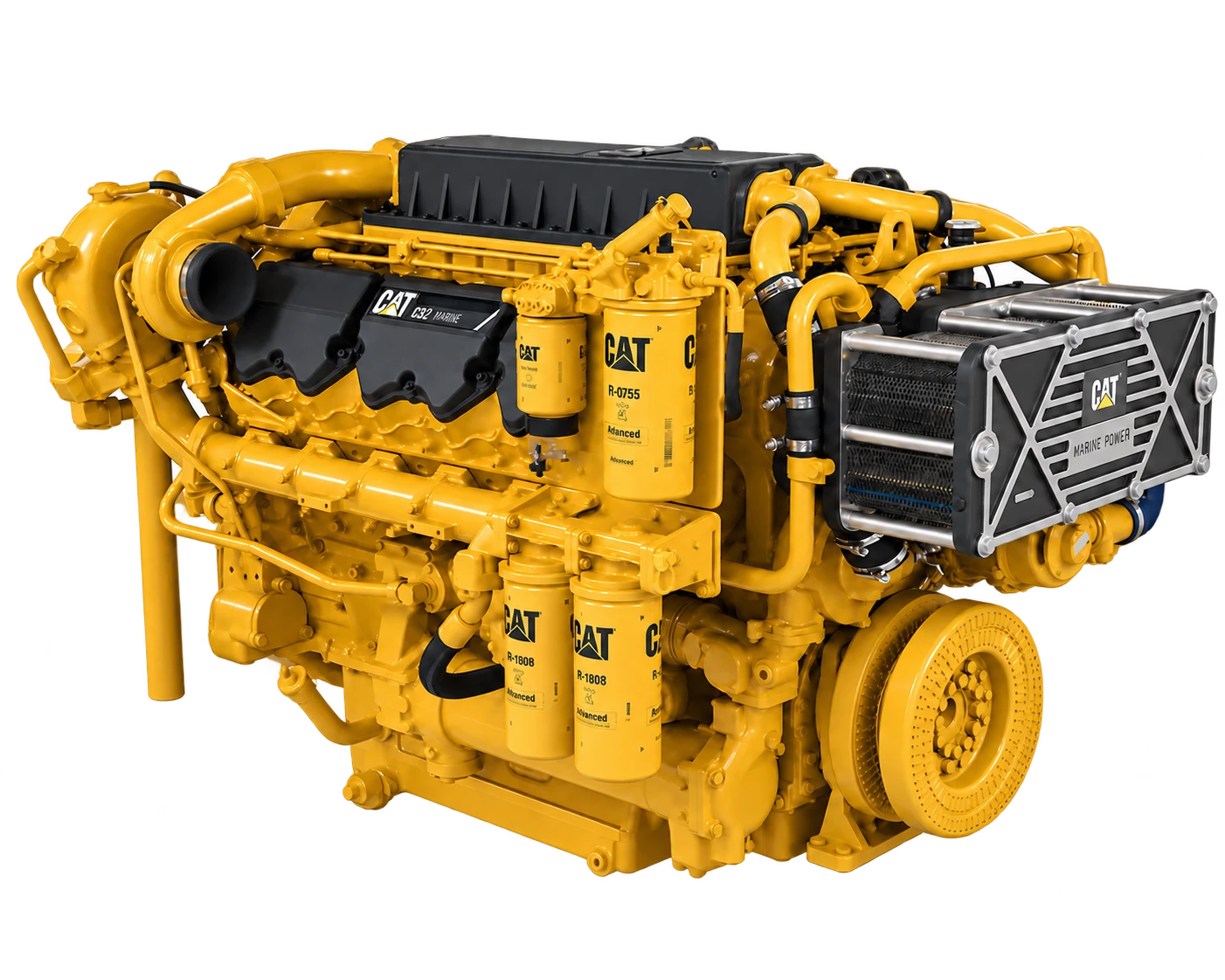
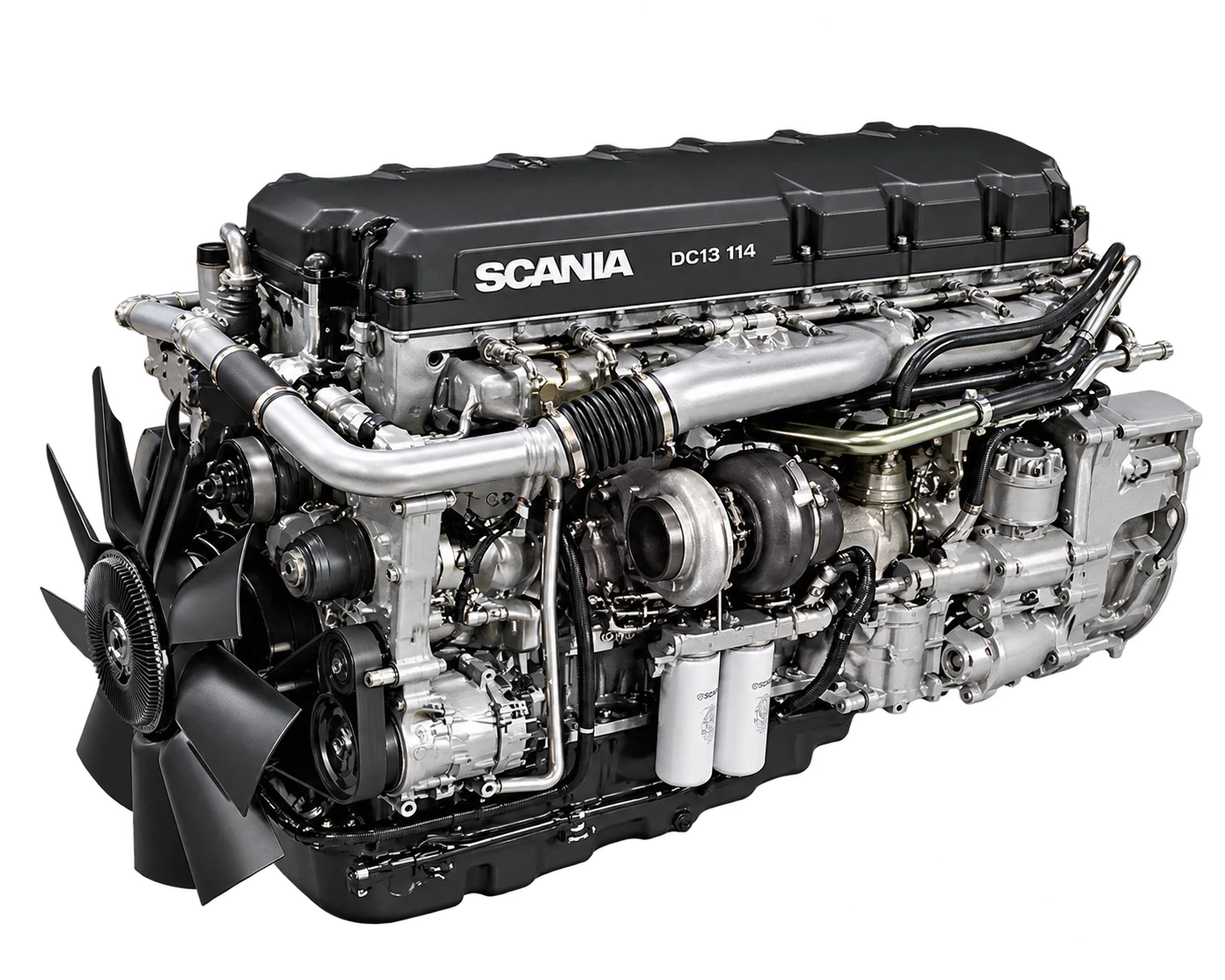
Two engines on the bench, one vessel at sea. A laboratory measured NTROPYX in March 2026 on a road diesel engine and a marine diesel engine. On board the M/V KAYRA, measurements were taken on two generator sets.

NTROPYX app
A calculation that prepares the conversation in the field.
ROI, dosing and road testing are brought together to prepare a decision a fleet team can act on.
Decision path
Go from a fuel bill to a quantified decision.
A serious decision starts with only a few inputs: annual litres, fuel, available evidence, modelled savings and deployment scope.
Every operation.
A different starting point.
Fleets, vessels and industrial sites. Start with your operating conditions.

Road freight
Route. Load. Fuel.
Define the trial around your routes, loads and fuel specification.
Explore road freight
Marine shipping
Propulsion.
Auxiliary power.
Review the C32 bench evidence. Define the conditions on your vessel.
Explore marine shipping
Heating & industrial
Heat. Power. Process.
Qualify the fuel, equipment and operating load before sizing the trial.
05 Professional pilot
Start with
your operation.
A fleet. A vessel. An industrial site.
Define a measured pilot around the way you work.
The business case
starts with your data.
8–12% is an operating-savings scenario. Assess it against your fuel, duty cycle and treatment cost. Bench figures measure fuel per kWh under their stated test conditions. A measured pilot connects the evidence to your operation.